
Landing in Co-Collaboration
On a lifelong conversation with land, and what it’s been asking me to build

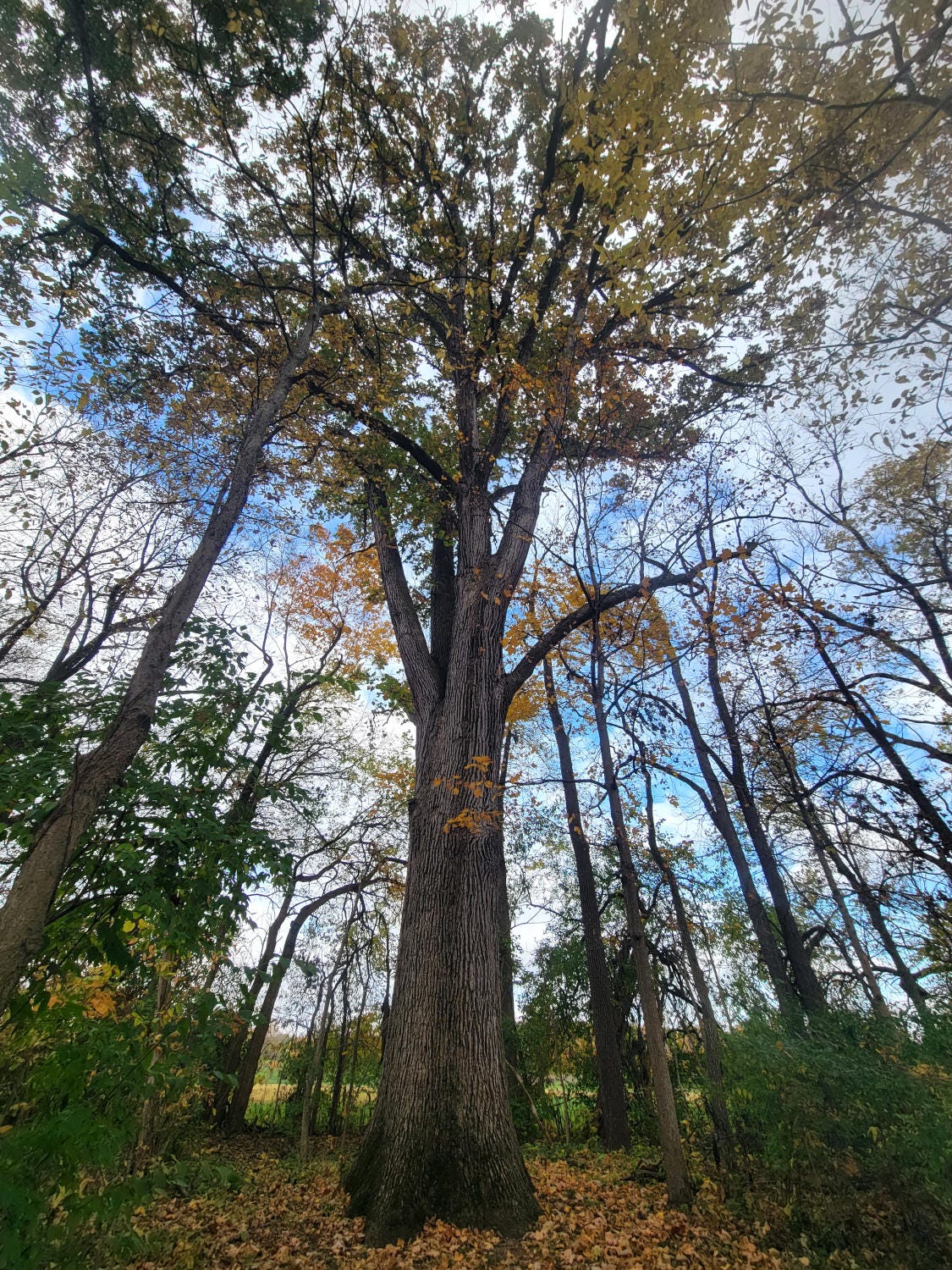
There is a white oak at the back of my father’s property in Indiana.
It didn’t grow up in the woods. It grew up in a cow pasture — open sky, no competition, nothing to reach around or through. So it grew the way a tree grows when the world gives it room: low trunk, thick, branches reaching long and far in every direction. Stocky. Unhurried. The shape of something that has never needed to apologize for taking up space.
It is the oldest tree on the property. The only white oak, except for a few of its own children nearby. The land was a forester’s once, back when Indiana still had winters and the old maples made sugar in the cold. That’s gone now. But the oak remained.
I stand on my father’s deck sometimes, feeling all the old pains and aches that no one besides me seems to see. My awareness drops — hard, the way it does when something real is happening beneath the surface noise. And I feel the tree.
We’ve been talking for a long time, that oak and I. But not like this. This feels like a flood.
Of how this tree — these trees — have held my family in their healing. My father’s world has grown very small. The land called him there, I think. In part so that he could heal in the particular way that only a small world, tended by old roots, can offer a person who has run out of room to run.
The oak is a regional anchor. I feel it connected to others — old burr oaks on fence rows, red oaks eighteen inches in diameter that should have been harvested decades ago for some forgotten human purpose and weren’t. As if an invisible network of highly intelligent beings knew what we needed before we did, and arranged themselves accordingly.
Land doesn’t give you what you want. It gives you everything you need.
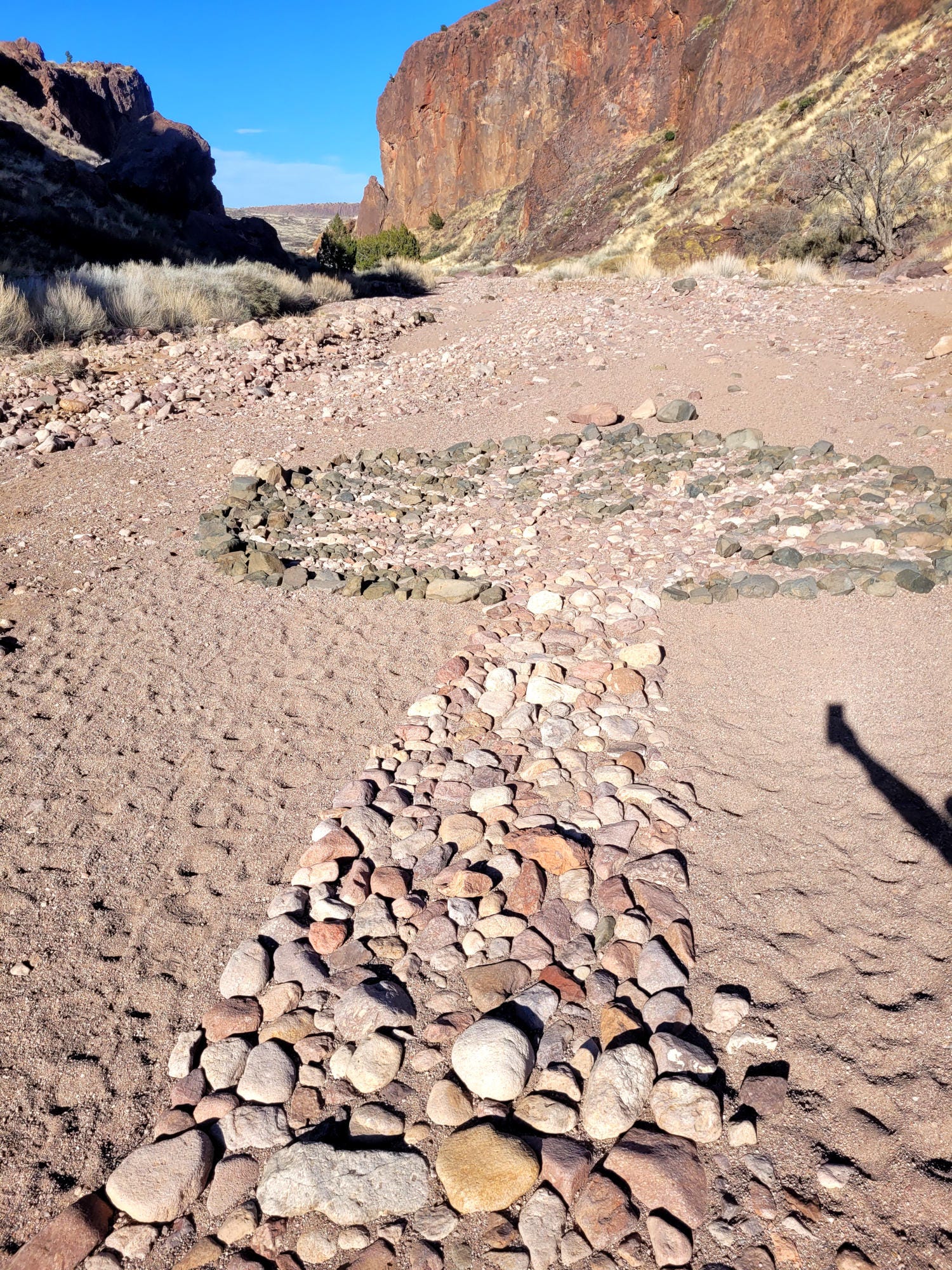
I learned this the slow way.
In the repetitive moments — picking green beans for hours in a summer field, dipping a paddle for eight hours a day on a wilderness river — something opens that doesn’t open any other way. Sometimes you feel it in real time. More often, recognition comes decades later. Looking back at those spaces, those times of embodied repetition, I have found a great deal of healing there. Not in the individual action, but in the convergence of circumstances: internal state, rhythm, consequence, the particular intelligence of a place that has been paying attention longer than you have.
Sometimes that is a weary child in the woods, gasping through tears from witnessing, again and again, circumstances outside their control. Circumstances that lodge in the body and don’t let go. But a seed was planted in those moments. It matures in its own time.
The woods held what the humans couldn’t.
I grew up in a house where the adults were not available to be adults. There was no one coming to rescue me. The door to human relationship has always been complicated for me — fraught in ways I am still understanding. But one thread runs through my entire life without breaking:
The woods and waters could meet me where I was.
They could hold all I had to carry.
This has been true in Indiana and in Michigan and in Arizona and in New Mexico and in Ontario. My wandering years taught me that this help is available regardless of geographical location. That it always goes deeper than you expect. That the land meets you at the level of what you actually need rather than what you think you’re asking for.
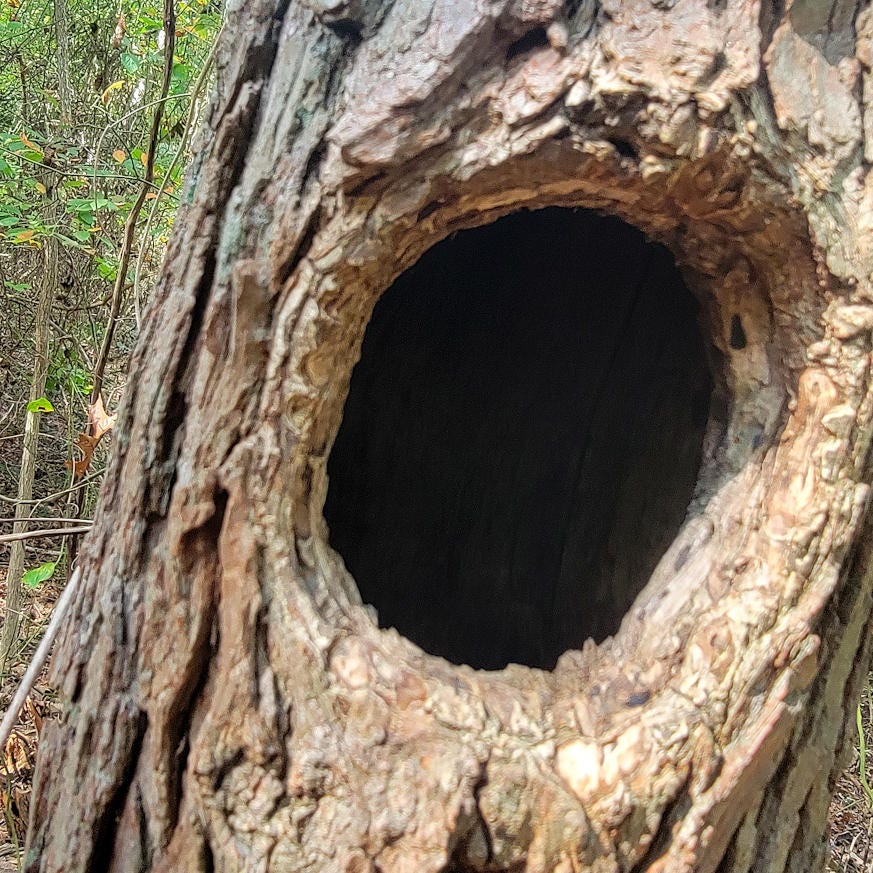
This is me as a nomad in the desert southwest with a broken down rig.
Me in a small valley filled with mesquite and juniper, walking to town, listening to the dry wash crackle under my feet and the javelina scurry away in the dark. The particular silence of a landscape that has learned to survive on almost nothing and offers that knowledge freely to anyone patient enough to receive it.
This is me and my kid busting trail too early in the season, waist deep in snowmelt, pushing through buck brush onto fresh bear tracks in the mud on the other side.
This is ten days into a wilderness trip and never wanting to return to the world that had been normal before.
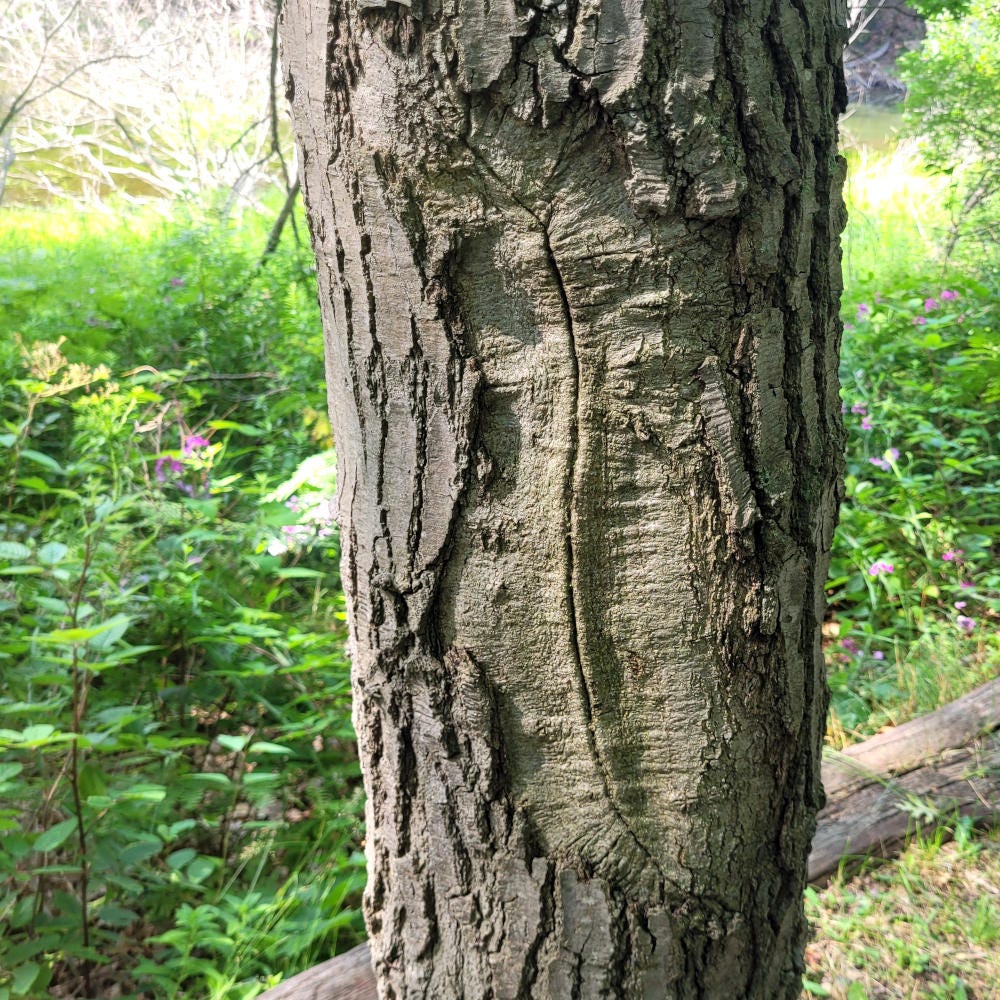
This is my hand moving across the bark of a hemlock — feeling for connection and finding grief in equal measure. Ash, elm, birch, beech, oak, hemlock: threatened or already gone. Their tribe being erased by the ignorant actions of a deeply wounded people who never learned to ask what the land needed before taking what they wanted.
I witness their losses the way you witness someone’s grief when you love them and can’t fix it. Staying present. Letting it land. Not performing consolation.
I visit a friend’s farm. The land has been intensively cultivated for nearly thirty years.
It whispers: I’m tired. Something new is possible here, but only after a long rest. It will come in its own time.
Not an accusation. Not a demand. A statement of condition, offered plainly to anyone paying attention.
This is what land does when you’re in relationship with it. It tells you what it needs. The question is whether you’re listening, and whether you’re willing to let the answer change the plan.
Most land projects fail this test not at the dramatic moments but in the ordinary ones. The plan was made somewhere else, brought to the land, and imposed. The land’s feedback — the drainage pattern that contradicts the map, the soil that won’t do what the vision required, the microclimate that changes everything — gets treated as an obstacle rather than information.
The blueberries get planted on alkaline soil because someone wanted blueberries.
The cedar gets mowed down because someone had a different picture.
The river gets a tri-axle driven across it because someone needed access to the other side.
The land responds. Always. The only variable is whether you’re close enough to feel the response before it becomes a crisis, or whether you learn it afterward in the wreckage of what didn’t work.
I am not proposing a return to something that existed before.
There is no before to return to. The hemlock is already dying. The ash is already gone from most of the places I’ve loved. The land has been through things that cannot be undone, only witnessed and moved forward from.
What I am proposing is a landing.
A small group of people — not many, the number matters — who have learned through their own hard seasons to sit in a circle and hold something together that neither the land nor the humans could hold alone. Who understand that the land they’re on is not their project. They are the land’s project. The people called to a place by whatever intelligence arranged the old oaks along the fence rows and left the white oak standing in the pasture when everything else changed.
To stay in North America not as martyrs but as anchors. Holding space for those still awakening in the madness. Maintaining the contract signed between humans and the land that called them forward to incarnate here, in this time, in this particular geography that is losing so much and still asking to be tended.
The land as collaborator means this practically: it has a voice in what gets built and when and how. Not through a human speaking on its behalf — though that too — but through the older mechanism. Through what it will and won’t support. Through what volunteers and what fails. Through the flood that takes what was built too close, too fast, without asking. Through the tired farm that whispers not yet to the person with the plan.
The collaboration is not metaphor. It is the daily practice of listening before touching, of letting the land’s actual requirements shape the human structure rather than the other way around.
This is what makes the experiment different.
Not the governance documents, though they matter. Not the sociocratic structure, though it protects the whole. Not even the selection process, though it determines everything.
What makes it different is starting from the position that the land is already in conversation with the people who belong there. That the job is not to impose a vision on a piece of ground but to show up, stay long enough to be recognized, and find out what the place has been waiting for someone to do.
Those who recognize this in their bones will know.
Not because they’ve read the right books or attended the right workshops or developed the right framework. But because they’ve been in the woods when they were breaking and the woods held them anyway. Because they’ve put their hand on the bark of a threatened tree and felt something that had nothing to do with their own grief and everything to do with it simultaneously.
Because the land has already been in conversation with them.
They’re just ready now to build something worthy of that relationship.
Green Alchemy is regenerative work across land, systems, and human experience. This is where I think out loud about what that actually requires. When you're ready to work together: digital systems for living work → wildcraftdigital.com | shamanic practice for clarity and restoration → spiritofthewoods.land
Profound. Thanks for naming these things.
I seek an initiation process for those who have never felt the healing of the forest.
There are those of us who crawled on the ground after all the trees were cut down around our childhoods, digging and smelling the dirt (and reading about it in books) to find what was not available to us otherwise. It took me nearly 20 years to experience a forest in the way you describe, because of the situation in which I was raised.
The children of this world now are the ones most in need of that kind of reconnection. If there is anything that connects humans in all stages of collapse grief, it is the love of our own children, and by extension, one would hope, all the children.