

June in central Illinois and the air is already saturated before the crew arrives.
Jon is in the shop. Has been since before anyone else pulled in. The Italian spader threw a gear three days ago and he is still in there, unhurried, reading the machine the way some people read weather. He will spend four more days on it. At the time this seems insane to me — the kind of detail that costs more than it returns.
I am making $7 an hour. I do not yet know what I am watching.
Twenty acres of black prairie soil outside Urbana. No trees for miles except tight around the houses. Rolling ground and then corn and then beans and then more corn to the horizon. Inside that — lettuces. Arugula, tatsoi, mizuna, baby kale, moving in unified motion through the hands of people who don’t fit cleanly anywhere else and have found, here, that it doesn’t matter. The Mexican guys eat lunch together in the shade of the truck and it is the best food on the farm. Someone is always sharpening something. Someone is always three rows ahead.
I killed the eggplant that season. Thinned them wrong, watched them go yellow and leggy and finally give up. Said nothing. Nobody called me out. I just — knew. Filed it. Never did it again.
That was the first thing.
The second thing was watching Jon come out of the shop on the fourth day, wipe his hands, back the tractor up to the spader, and drive into the field like nothing had interrupted anything.
In 2004 I started Seldom Seen Farm on the edge of the suburbs outside Indianapolis. I had a place. A tiller. No idea how to manage soils or water. Couldn’t keep basil transplants alive. Fumble-fucked through soil blocks and shit industrial compost with all the careful attention of a home gardener who didn’t yet understand that this was going to be my sole living.
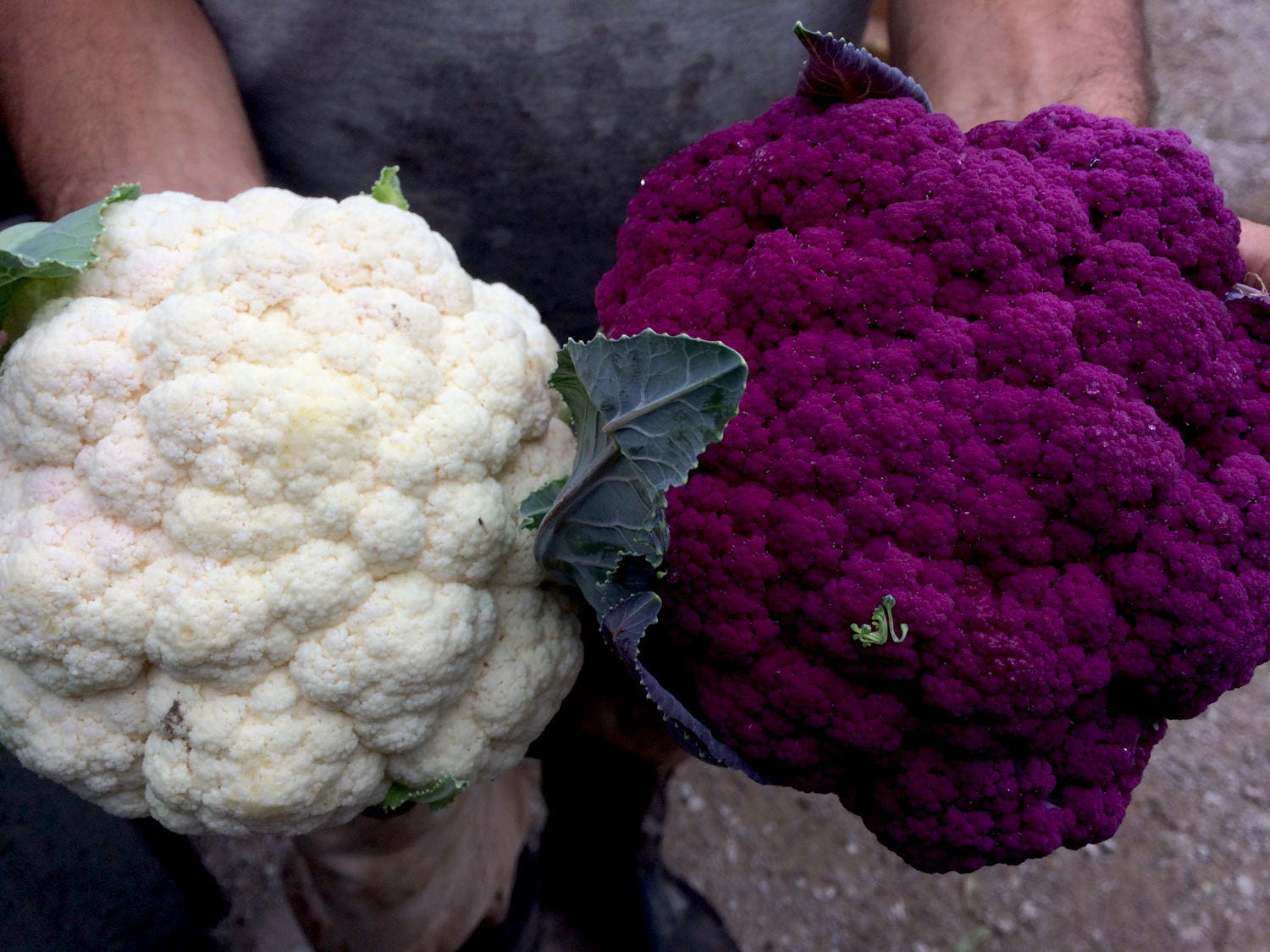
The farm was surrounded by sprayed corn and beans. Tractor cowboys running on energy drinks. Row crop agriculture — predictable, boring, stabilized, subsidized, insured, scalable. A system with a floor built under it and a story about free markets spread over the top.
I was going to build something that didn’t exist before. I was going to do it my way.
I didn’t know yet what that would cost.
For three years I was mostly solo.
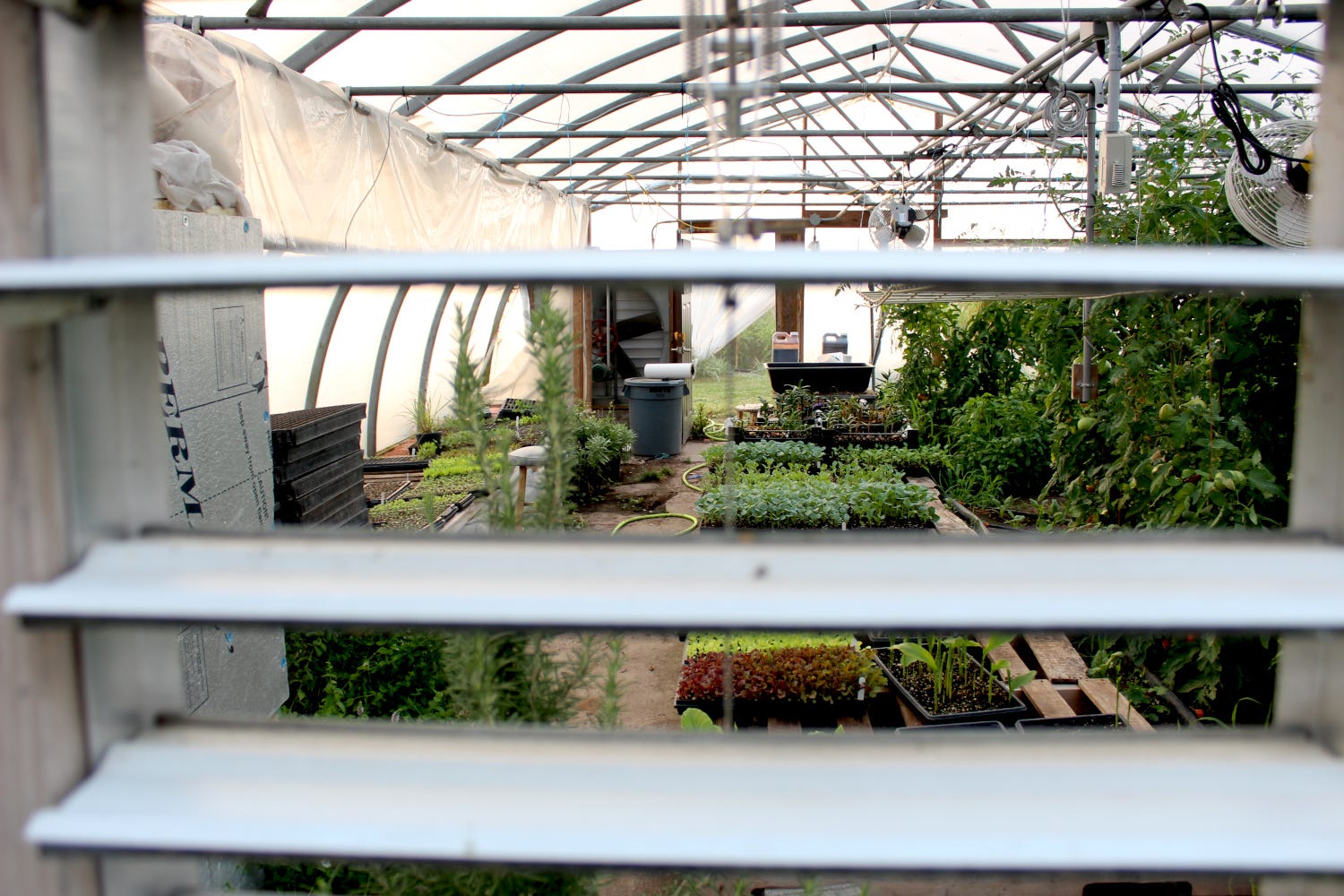
I worked restaurants in the winter to stay afloat and funnel money back into the farm. I bought a 1949 Allis G and a 1980 IH and learned them the way Jon had learned the spader — slowly, with attention, until I understood what they were asking for. I sourced greenhouse frames from abandoned operations at a dollar a square foot for galvanized steel and built out season extension one hightunnel at a time, battling voles in the winter greenhouses where they would move through rows of tender lettuces and mustard greens like a slow tide.
The washing setup lived under a maple tree in the front yard. An old 80s washing machine with enough weight in the bottom to keep it from walking through the mud. A stock tank for sorting. Kitchen countertops scavenged from somewhere. A hundred dollars and a pickup truck. It worked because it had to. It worked because there was no money for anything better. It worked because the lettuces were coming in and they needed to be clean and cold by market morning and this was the way.
We harvested three days a week. Each of those days I beat the crew in, sharpened the knives, loaded the harvest truck. And I got maybe 45 minutes of solo cutting time in the field before everyone arrived and I went into management mode.
Kneeling between rows of arugula in the dark before dawn. Running through the day — what was priority, what could wait, what needed to move. And when that was decided, a moment of quiet. I learned to anticipate the first puff of wind coming out of the east. To read how the day would move across the land and through the people and into the crops. That breath of cool stillness in a hot and muggy climate where you can’t wipe the sweat off because the air is already saturated.
That 45 minutes kept me sane.
What I didn’t understand yet was that it was also keeping the farm sane. That I was in genuine relationship with that land — reading it, responding to it, carrying it the way you carry something you love. And that the farm was built on that relationship the way a house is built on a foundation, mostly invisible, holding everything above it.
If I was the structure and the bones of the operation, she was the heart. At the farmers market I was too exhausted by then to do much besides take money and refill the stand. I had already peaked on how much human exposure I could absorb. I wanted to disappear into the woods from the pressure, the weight of constant action. I ran threat and risk analysis every time someone approached the stand.
Kelly moved differently. She could read what people were seeking and meet them there without it costing her anything. A smile that wasn’t performance. A fluency with strangers I was still trying to learn. She took the time to tune in. People left having been seen.
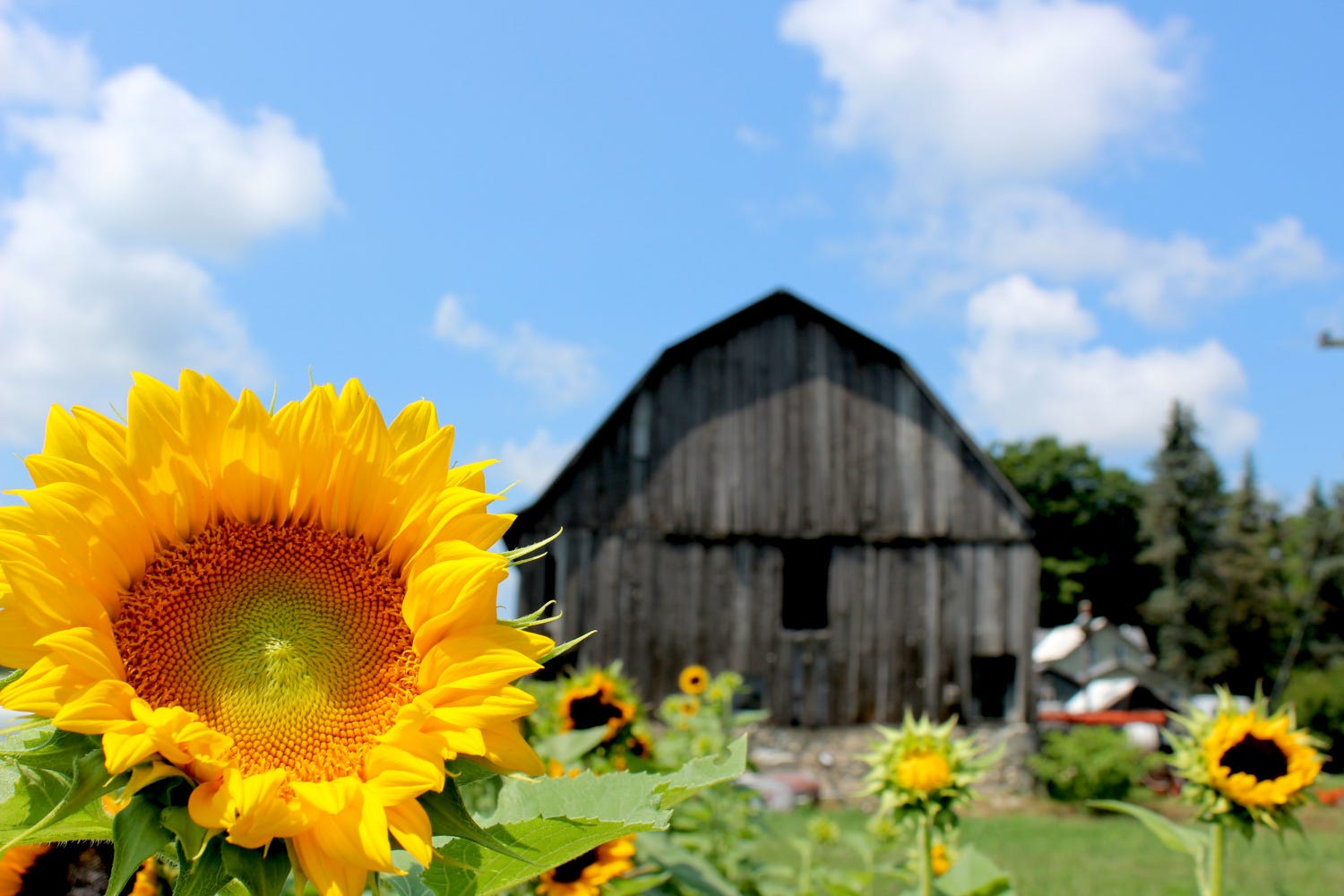
The farm required both of us. What I didn’t understand — couldn’t have named it then — was that this meant the farm was never actually a sole proprietorship. It was always a distributed system. The structure and the heart were two different people, and the operation needed both to function. The model said one family, one land tenure, one unit of risk and reward. The reality was more complicated and more fragile than that.
I was still loading the truck at 4am on Saturday mornings and driving to market with enough caffeine in me to put down a golden retriever. The weight was distributed unevenly. It was distributed onto me.
Then there was the lightning strike.
I don’t remember what the farm looked like after. I remember driving away at 35mph. Following the ambulance — non-emergency speed, which means she was alive, which means the world had already changed but hadn’t yet fully declared itself. The crew was still in the field behind me. Someone was holding my one-year-old daughter.
Two weeks are a blur. A brother-in-law ran the market on harvest lists I handed over without caring if anything went wrong. The off-farm house we’d bought that spring didn’t feel like home — Kelly had spent maybe eight weeks in it. The air conditioning was nice. I remember that. I couldn’t look at the hill where she was struck. Blacked it out. Wouldn’t go near the house on the property to fill my water bottle. For ten years I held that blackout in place.
My father had it burned down a few years later.
The community caught the farm. A lobster dinner raised $75,000. People showed up. The CSA held. The market held. The restaurant route held. Whatever relational infrastructure we had built — it was real enough to absorb a crisis and keep the operation breathing.
What the community could not do was hold a slow unraveling. What no one can do is absorb a bad season while the person at the center is already empty.
I partnered with a man named Todd. Great intentions. Skilled grower. Unstoppable optimism. We scaled up hard — 120 CSA members to 250, radio ads on the independent station, the whole expansion. Optimism is a real thing. It gets things started. It draws people in. It does not, however, spread fertilizer on potatoes or work out the kinks in an irrigation pump or ensure that the shelf-stable crop you are responsible for makes it to fruition in a year that will prove the most challenging growing season in living memory.
That March was in the 80s when it should have been in the 60s and frosty. April was 80s and 90s. May was 90s. June through August ran 90s to a peak of 104. The tomatoes wouldn’t set fruit. Our core crop of summer lettuces failed. We ran the crew in split shifts because it was too hot to work straight through. We pumped water to plants that would never grow to fruition, just hoping the heat would break.
Instead of distributing our potatoes to members, I was picking up pallets of organic potatoes from wherever I could find them after failing to source from regional growers who already had markets for their crop and no excess to share.
It was July. I was standing next to a field lead looking at what the weather had made and what the partnership had made and where the cost had landed — on me, as it always lands on the one who cannot stop — and I knew I was done. Not at the end of the season. Done in the way that the body knows before the mind will say it. My nervous system was running on stress and overwhelm and resentment and it needed peace so badly it would have walked away from anything to get there.
Then the heat broke. And some weeks later I was picking hailstones out of the farm’s last chance for the season, tomatoes still green on the vine.
I was still visiting Kelly in the nursing home. She had been there for two years by then.
I know people doing this work who were making $50,000 net. $80,000 net. Real numbers, real farms, real lives built on direct-market production.
Blue Moon Farm in Urbana ran for 25 years. Twenty acres of black prairie soil, half-acre of greenhouses, steam-sterilized between every season, a crew of twelve, systems built over decades, all the gear needed to operate, the original farmer still available, a successful generational transition. Jon kept farming. Lorien took it on. They did every fucking thing right.
NPR covered the closure for weeks. Local anchor, local grief, local disbelief. Lots of attention to the loss.
None of it asked what it actually costs to be a parent and run seven intensive acres of vegetables with a half-acre of greenhouses while managing a crew and fixing everything that breaks and running the markets. None of it named the mechanism. The story the media told was about a community losing something it loved. It was not about why the thing that was loved could not survive.
Jon kept the land and the gear. It’s hay now. Lorien does organic certifications. She has time with her teenager.
The organic movement imported the CSA concept from Europe. Cash flow, stable market, customer connection, shared risk, closed loop — a relational instrument designed to put the farmer and the eater in genuine accountability to each other.
American markets did what American markets do. They optimized it. Home delivery. Wholesale pricing. Unlimited volume. The farmer became a supplier and the eater became a subscriber and the relationship that was the whole point became a feature no one was paying for.
The farmers market went the same direction. Weather in the field and weather on Saturday morning and a market administrator who added a reseller with unlimited volume and early tomatoes trucked up from 200 miles south and then declined to enforce violations because those tomatoes came in before anyone else had tomatoes and the customers wanted tomatoes.
The convenience layer does not have bad intentions. It wants to extend access. It wants to lower the price. It wants everyone to have the thing. What it cannot do is preserve the depth that made the thing worth having. That depth — relationship, accountability, fairness, the actual loop between a specific piece of ground and a specific human body — gets strip-mined in the process. Not as a side effect. As the mechanism.
The system is not broken. It is working exactly as designed. Stabilized, subsidized, optimized, scalable. The tractor cowboys in the surrounding fields were not villains. They were the system functioning normally. The floor built under them was real. The story about the free market spread on top was not.
The second farm was smaller. A very rural, xenophobic corner of Michigan where tourist-area wages ran $12 an hour with the implicit expectation that you would work there for the rest of your life without a raise. Farming was the least worst option. We actually knew how to grow things by then, which annoyed the other growers and their worm-eaten turnips. We drew a crowd to a market that was barely surviving when we arrived. We found our people — the UU church, the cottagers from downstate, the ones who knew the difference.
We built a multi-farm CSA in a rural backwater where making a living in a 16-week season is genuinely hard. We shifted what people thought was possible in that place. And when we were done — in the middle of a pandemic, doing local home delivery and food relief — we handed what we had built back to the people who were left, because we were not going to do it anymore and they could, if they wanted to.
The cost of running a community resource that functions as a commons without any of the protections of a commons. We did all the work. The customers valued what we did. No one witnessed the cost. So we bore it until we couldn’t any longer and then we disappeared, and the local NRCS guy who had taken credit for our success no doubt flipped the script.
This is the autopsy finding.
The owner-operated farm did not fail as an economic model, though it has been losing the economic argument for 150 years. It failed as a relational model. It concentrated every load — biological, financial, emotional, physical, relational — onto one person or one household, provided no institutional redundancy, no risk pooling, no distributed governance, and then told the person carrying all of it that their virtue was the variable.
When the lightning strikes, the community can catch you. When the season turns against you for five months straight while your partner isn’t carrying his share and your wife is in a nursing home and your nervous system is running on fumes — there is no structure to catch you. Because the structure was you.
The ideal promises freedom. Freedom from the wardens — the invisible standards, the unwritten expectations, the punishment for failure dressed up as something else. And the farm delivers on that promise, partially, for a while. The eggplant dies and it is a mistake, not a verdict. The misfits show up and there is a place for them. The 45 minutes kneeling in the arugula before dawn is genuinely yours.
But the farm that offered freedom from the wardens was sitting inside a larger system run by different wardens with more power and longer reach. The weather. The capital structure. The land tenure that meant twenty years of work built equity for someone else. The market that optimized the relational infrastructure into a delivery service. The insurance gap. The isolation. The requirement that one person hold it all.
Cause of death: load-bearing relationship with no redundancy, operating inside a system that was never designed to keep it alive.
The conditions that would have allowed it to survive were not bad luck. They were not present. They were actively prevented from forming.
Those conditions can be built. The question is what they require: different land tenure, different capital structure, different human organization, different relationship to failure and knowledge and each other. A form that can keep functioning when the person at the center has nothing left, because the center is distributed — held by a coherent group, in genuine relationship with living land, in real time.
What stands out most in your piece isn’t the tragedy or even the work itself — it’s the pattern. The American small‑scale, community‑based model keeps producing the same cycle: one person becomes the load‑bearing center of an entire ecosystem, the system extracts everything from them, and when the weight finally exceeds human capacity, the collapse gets framed as personal failure instead of structural design.
You can see the loop clearly:
build → carry → compensate → absorb → collapse → rebuild → repeat.
Not because the farmer is flawed, but because the ecosystem demands more than any one person can sustainably give.
The soil metaphor applies at every level. Much of American land has been strip‑mined of nutrients, and the economic/cultural soil around it has been strip‑mined the same way — optimized for scale, speed, and individual burden. Anyone trying to build relational, human‑scaled systems inside that environment ends up fighting the ground they’re standing on.
And unless the ecosystem changes, the pattern repeats.
Not as misfortune — but as inevitability.